

Gurucharan Mahapatra
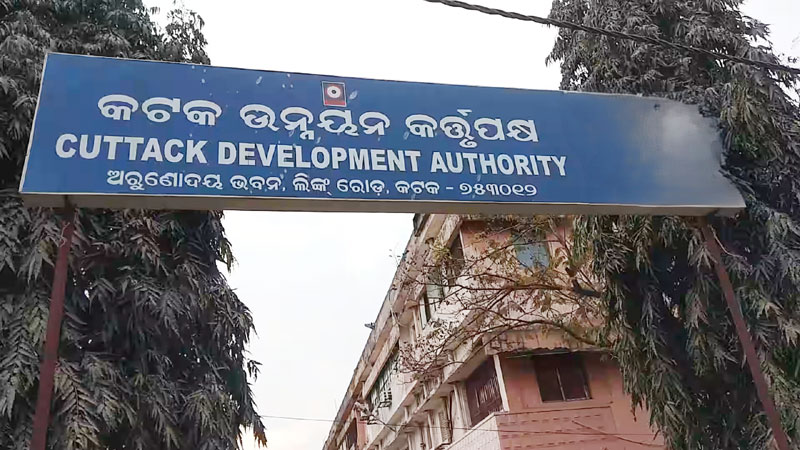
The Cuttack Development Authority (CDA), entrusted with guiding the planned growth of Odisha’s second-largest city, has come under scrutiny over safety concerns in its flagship housing colony, Abhinab Bidanasi. Recent decisions by the authority seem to prioritize commercial interests over the core objective of sustainable and secure urban development, raising serious questions about the safety and well-being of residents.
Since its inception, the CDA has positioned itself as a self-sustaining, profit-driven entity. However, its mandate also encompasses a critical responsibility to maintain environmental integrity through the creation of green spaces and public amenities while ensuring balanced urban development. The authority is mandated to create development plans, regulate land use, construct housing and commercial facilities, and provide essential infrastructure such as water supply and drainage systems. Yet, in a troubling shift, the CDA seems to have succumbed to profit-driven motives, compromising its foundational objectives in the process.
The troubling trajectory began in July 2001 when the Odisha High Court issued an interim prohibition on the construction of high-rise buildings in Cuttack. This decision was prompted by a Public Interest Litigation (PIL) addressing concerns about unauthorized constructions, including violations of approved structural designs and unauthorized increases in height. In response to this legal oversight, the court mandated that the CDA closely monitor building regulations and enforce compliance.
By February 2011, the High Court lifted the construction ban, with restrictions remaining in place for areas adjacent to Cantonment Road and slums. The CDA subsequently sought modifications to the ruling, referring to the 2010 Cuttack Development Authority (Planning and Building Standards) Regulations and arguing for vertical expansion to accommodate a growing population. Observers noted that the CDA’s eagerness to obtain permissions for high-rise buildings hinted at vested interest only.
Since then, Cuttack has seen a surge in vertical development, with numerous private developers, both independently and in public-private partnerships (PPPs), constructing high-rise towers. Some buildings have reached heights of 15 floors, while plans for towers as tall as 22 stories are underway. While such skyscrapers evoke admiration, questions have arisen concerning the safety and stability of the foundations upon which they stand.
Recent collaborations between the CDA and private developers, including DION and SGBL, have led to the launch of integrated housing and commercial projects in prime sectors of Bidanasi. For example, developments such as DION Skywalks in Sector 8 and DION Twin Towers in Sector 11 have garnered attention, but safety remains a paramount concern. The DION Skywalks project, in particular, has raised alarms due to its precarious proximity to the Kathajodi River embankment. During construction, excavation for two basement levels has encroached upon the base of the embankment that protects this reclaimed area from floodwaters.
This extensive excavation raises vital safety questions, especially given recent seepage issues that have highlighted the embankment’s vulnerability to potential breaches. Urban planners express concern that the CDA has inadequately addressed these vital safety aspects while pursuing its high-rise building initiatives.
Located within the Mahanadi and Kathajodi alluvial delta floodplain, while construction of high rises is not categorically prohibited, it demands stringent precautions. High-rise buildings impose significant pressure on the alluvial soil beneath them, increasing the risks associated with soil liquefaction—a geotechnical hazard where saturated soil loses strength during seismic events. Cuttack, classified under Seismic Zone III, is susceptible to moderate to strong seismic activity, posing a critical threat as the saturated soil could behave like liquid, leading to catastrophic structural failures.
Abhinab Bidanasi, characterized by its shallow, loose alluvial soil and high groundwater table, is especially vulnerable to liquefaction—a phenomenon that could lead buildings to sink, tilt, or even collapse without visible warning signs. Given these alarming realities, it is imperative to question whether the CDA has diligently considered the geotechnical nuances in its rush to capitalize on development opportunities.
As Cuttack grapples with the dual challenges of rapid urban growth and the safeguarding of its residents, the CDA must realign its priorities. Ensuring the safety and stability of structures within Abhinab Bidanasi must take precedence over financial gain, underscoring the need for responsible urban planning that reflects both growth and safety.
Quoting from CDA website “As the plotted development will not ensure a high density standard and will delay the solution of housing problem, corporate housing projects in multistoried apartments to be encouraged for owing a house or staying on rent. Of the total saleable residential area, not more than 50% should be sold to private individuals for housing purposes with plotted developments. The ground coverage, set-back standards and the F.A.R. should strictly adhere to.” The basic inspection regarding standards of construction periodically are never done.
The DION Skywalk project has been constructed on land that was originally earmarked for development by the Orissa State Housing Board (OSHB). While the master plan had proposed approximately 50 individual houses for the area, the current project comprises 440 flats of varying sizes, along with sprawling commercial complexes in the basement levels.
This significant deviation from the original plan has dramatically increased the expected population density and commercial activity in the locality. However, the sewerage and drainage systems in that section of Sector 8 were designed and laid long ago, strictly in accordance with the initial master plan. Since then, no major upgrades or expansions have been undertaken.
As a result, once the DION Skywalk becomes fully functional, the existing infrastructure is likely to be overwhelmed, potentially leading to serious issues related to drainage, sanitation, and overall urban management—an avoidable failure that raises concerns about planning, oversight, and long-term sustainability.
