

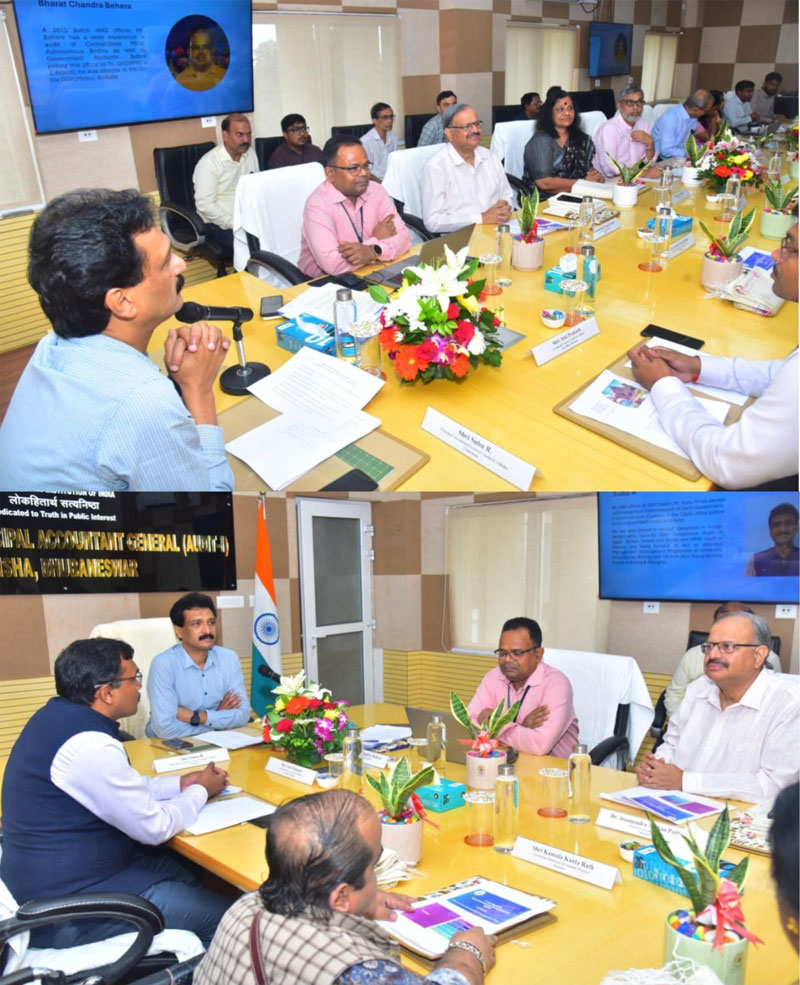
Bhubaneswar, October 29, 2025:The meeting of the State Audit Advisory Board (SAAB) was held on Wednesday, October 29, 2025, at 11:00 AM in the Conference Hall of the Office of the Principal Accountant General (Audit–I), Odisha, Bhubaneswar.
The proceedings commenced with opening remarks by Shri Banoth Rakesh Naik, Deputy Accountant General, followed by a welcome address by Shri Bharat Chandra Behera, Senior Deputy Accountant General, who elaborated on the concept and significance of the State Audit Advisory Board and its role in strengthening audit practices in the State.
Thereafter, Shri Subu R., Principal Accountant General (Audit–I), Odisha, felicitated the nominated members of the Board and delivered the inaugural address. He emphasized the multidisciplinary nature of the SAAB and its significance in refining audit methodologies, identifying emerging risks, and promoting good governance, transparency, and accountability. He underlined that audit must move beyond financial scrutiny to understand the social, economic, and cultural dimensions of public programmes and policies.
Shri Atul Prakash, Accountant General (Audit–II), Odisha, appreciated the initiative of convening the meeting and observed that such forums should serve as continuous platforms for meaningful dialogue and exchange of ideas. He also highlighted the challenges in document access during audits and sought members’ suggestions for strengthening audit planning. Shri Prakash informed the Board about the integration of Artificial Intelligence (AI) and Machine Learning (ML) in audit processes to enhance analytical capabilities.
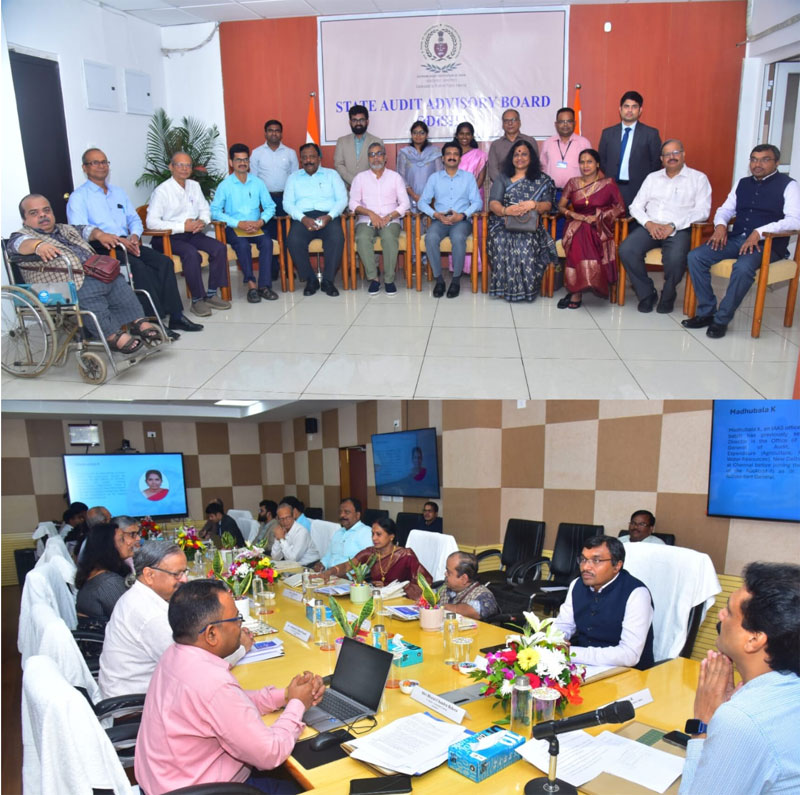
Following a brief presentation on the office profile, the external members of the Board expressed their insightful views and recommendations:
• Prof. D. Venkata Ramana suggested that audits may consider covering entire sectors rather than selected units for a more comprehensive assessment. He also proposed examining the upcoming Electricity (Amendment) Bill, 2025, with particular focus on the concept of “regulatory assets.”
• Prof. Ramana and Shri Biswajit Mohanty jointly recommended developing an Odisha Model that encompasses the complete value chain of the Mining and Power sectors, encouraging collaboration among universities, Chartered Accountants, and other professional bodies.
• Dr. Pravas Ranjan Mishra opined that audit reports should not only identify deficiencies but also highlight best practices of the Government. He emphasized inclusion of Gender Budgets and Climate Budgets in audit focus areas and suggested assessing progress in the agriculture sector, particularly with respect to achieving self-sufficiency.
• Ms. Sujata Mohapatra and Ms. Hiranmayee Mishra recommended expanding audit coverage in the cultural sector, noting that Odisha, being a hub of art and heritage, deserves a robust audit mechanism for the Department of Culture and related institutions.
• Dr. Soumendra Mohan Patnaik proposed broadening the scope of audit through three key dimensions:
- Audit Literacy – enhancing stakeholder and citizen awareness;
- Audit Transparency – fostering a moral and positive image of audit; and
- Audit Outcome – developing qualitative and quantitative benchmarks to promote good governance.
He also underscored the importance of economic literacy, inclusive governance, and citizen participation, suggesting that local communities be empowered to act as watchdogs in public governance. Dr. Patnaik concluded by stressing the need to strengthen stakeholder engagement beyond financial aspects.
In his closing remarks, Shri Subu R., Principal Accountant General (Audit–I), Odisha, expressed sincere appreciation to all members for their active participation and valuable suggestions. He stated that the recommendations shared would guide the Audit Office in enhancing audit quality, efficiency, and impact. He also informed the members about the upcoming Audit Diwas celebrations and extended an invitation to participate in the two-week-long event.
The meeting concluded on a note of collaboration and shared commitment towards strengthening the public audit system in Odisha.
