
Tata Power’s ‘Gaja Sanrakshana’ Project Enters Phase 2, Expands to 18 New Zones in Odisha following the success of Phase 1

- Expansion supported by the Government of Odisha, reinforcing collaborative conservation efforts.
- Upgraded infrastructure under the project has contributed to reducing electrocution-related elephant deaths.
- State-level workshop in Bhubaneswar highlights Tata Power’s commitment to human–elephant coexistence and community-led biodiversity protection.
Bhubaneswar:Tata Power led Odisha discomsand the Wildlife Wing of the Government of Odisha, organised a State-Level Workshop on the GajaSanrakshana Project in Bhubaneswar, Odisha. The workshop brought together senior officials from the Government of Odisha’s Forest Department, representatives from partner SNEHA-NGO, experts from WTI and WWF, and leaders from Tata Power led Odisha discoms to review the project’s progress and chart the roadmap for its expansion.The workshop aimed to align key stakeholders on the project’s expansion and develop a coordinated action plan to mitigate human–elephant conflict.
Launched in 2024, GajaSanrakshana – meaning “Elephant Protection” in Sanskrit – is a flagship biodiversity conservation initiative by Tata Power, undertaken in partnership with the Wildlife Wing of the Odisha Forest Department and SNEHA-NGO.The project is aligned with the United Nations Sustainable Development Goals (SDGs) 1, 2, 13, and 15, focusing on biodiversity conservation, climate action, and sustainable livelihoods.
Odisha is home to over 2,000 elephants – nearly 7% of India’s total population – spread across three Elephant Reserves and 14 designated corridors. However, rapid industrialization, mining, and infrastructure development have fragmented their habitats, escalating conflict. In the past decade alone, the state has recorded 828 elephant deaths, including over 160 due to electrocution, highlighting the urgency for coordinated conservation measures.The initiative seeks to mitigate human–elephant conflict (HEC) in high-risk regions, prevent electrocution-related elephant deaths, strengthen early-warning systems, and foster human–elephant coexistence through community engagement and technology-led interventions.
The pilot phase, launched across three forest ranges – Hindol, Dhenkanal-Sadarand Bantala, recorded measurable reductions in electrocution-related elephant deaths. Infrastructure audits, awareness campaigns, and collaborative field monitoring helped communities identify and address electrical hazard points, while improved coordination between forest officials, discoms engineers, and local volunteers strengthened on-ground response mechanisms.
Encouraged by these outcomes, the Principal Chief Conservator of Forests (Wildlife) approved the project’s expansion to 18 additional forest ranges across Tata Power led Odisha discomsregions in August 2025.
The expansion phase now covers 18 forest ranges across eight districts – including Dhenkanal, Angul, Keonjhar, Mayurbhanj, Sundargarh, Sambalpur, Deogarh, and Ganjam. Field activities have already begun in key hotspots such as Keonjhar, Sundargarh, Mayurbhanj, Ganjam, and Sambalpur, where human–elephant conflict has been most severe.
Key interventions included the installation of early warning systems, GPS-based monitoring, GSM-led display boards, and capacity-building programmes for local officials and villagers. These measures led to greater awareness, fewer conflict incidents, and enhanced community participation in conservation activities.
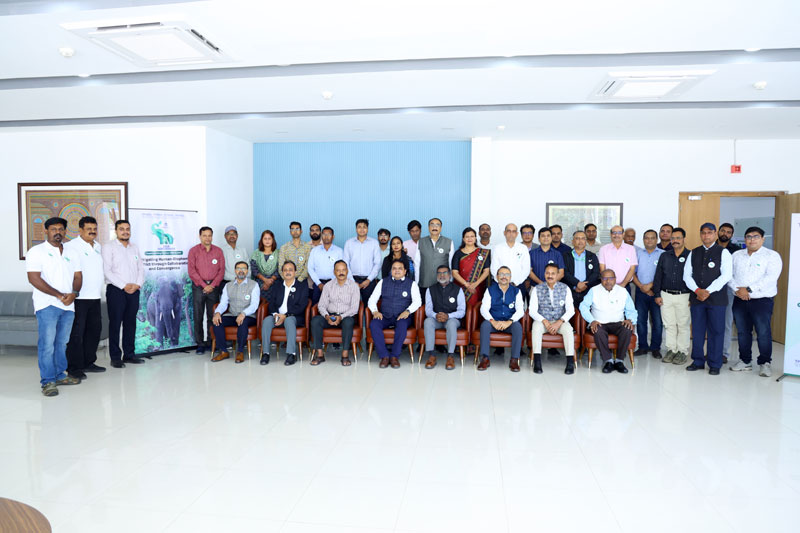
The one-day workshop in Bhubaneswar served as a platform to consolidate learnings from the pilot phase, align inter-divisional strategies, and finalize a state-wide action plan for Odisha workshop brought together over 45 representatives from Tata Power, the Forest Department, SNEHA-NGO, and partner organizations. Senior leaders, including Mr. HimalTewari (CHRO & Chief Sustainability & CSR, Tata Power), Dr. Manoj V. Nair (CCF, Wildlife Wing), Mr. Gajanan Kale,Chief of Tata Power Distribution Business, DISCOM CEOs, and senior Forest Department officials, emphasized the urgency of preventing electrocution deaths and strengthening collaborative mitigation measures.
Mr. HimalTewari, CHRO, Chief Sustainability & CSR, Tata Power, said:“At Tata Power, sustainability extends beyond business – it’s about fostering harmony between people, nature, and progress. Our partnership with the Government of Odisha and SNEHA-NGO reflects a shared commitment to safeguarding one of India’s most iconic species while promoting safer coexistence in human settlements. As we enter the second phase of GajaSanrakshana, our collective goal is to eliminate human–animal conflict and strengthen ecosystem resilience. Initiatives like these demonstrate the power of collaboration and deserve to be scaled nationally to protect both wildlife and communities.”
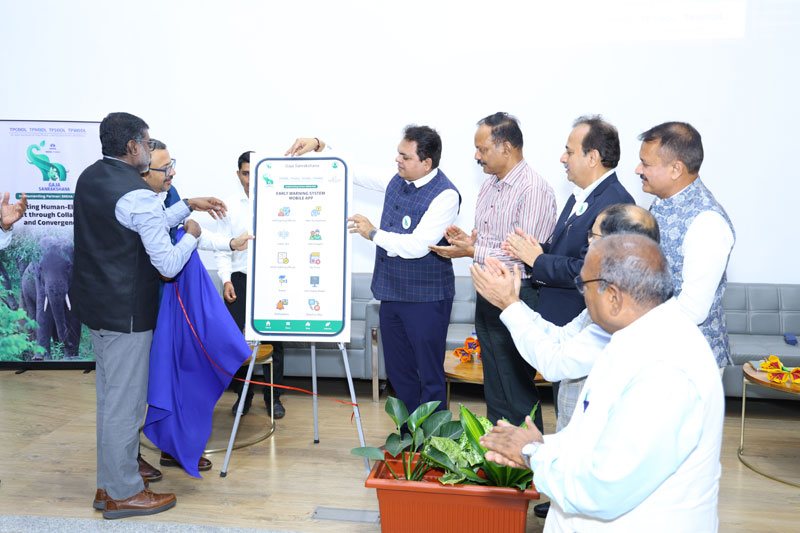
Mr. Ramaswami Krishnan, Executive Director of SNEHA-NGO (the implementing partner of the GajaSanrakshana Project), stated”Our partnership with Tata Power has allowed us to seamlessly integrate technology, awareness, and community engagement into elephant conservation. Training GajaSaathis for patrolling, alongside the introduction of the Early Warning Detection App, has played a crucial role in reducing human-elephant conflict incidents. This initiative demonstrates that when local communities are empowered and equipped with the right tools, conservation efforts become both practical and sustainable.”
Dr. Manoj Nair, Chief Conservator of Forests (Wildlife), Odisha, said:“Elephants have always been part of India’s culture and spiritual heritage, yet human–elephant conflict remains a pressing challenge. While elephant attacks can be fatal for humans, electrocution poses an equally serious threat to elephants. The partnership with Tata Power has already shown encouraging results, with a significant drop in electrocution-related deaths. Together, we can build an Odisha where coexistence is both possible and sustainable.”
As part of the scale-up, the project will deploy smart sensors, GSM camera traps, and a community-based mobile app to monitor elephant movement and issue real-time alerts. Community-led patrols, known as “GajaSaathis,” are trained for night surveillance and conflict prevention. Challenges such as habitat fragmentation, illegal hooking, unregulated solar fencing, and shrinking corridors were addressed through technical solutions, standardized fencing, safer power infrastructure, and improved monitoring. Over 1,300 residents have already adopted the Early Warning Detection App, enhancing vigilance and reducing response times.
By uniting government agencies, corporate partners, and civil society, the GajaSanrakshana Project exemplifies Tata Power’s commitment to collaborative environmental stewardship, demonstrating how technology, local knowledge, and sustained engagement can protect wildlife while ensuring community safety and livelihoods.
