

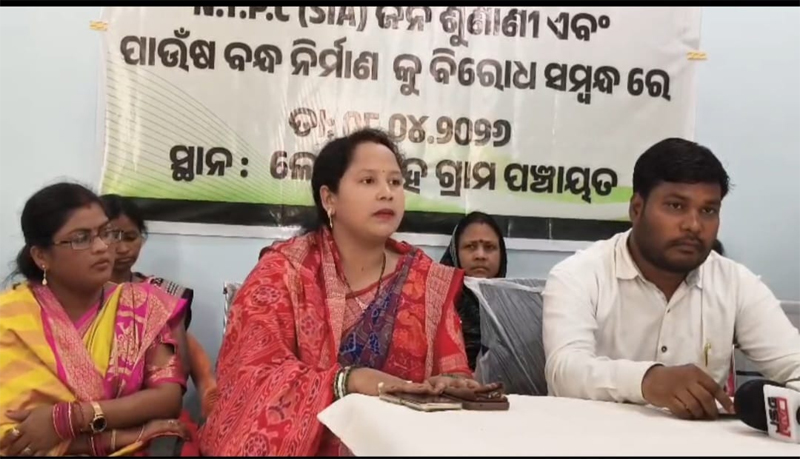
“Villagers from Loisingh, Chandnimal, Rajpur, and Gaudmal panchayats strongly opposed the proposal, citing fears of environmental degradation, health hazards, and possible displacement. Many questioned the rationale behind acquiring land in Jharsuguda when the main Darlipali plant is located in neighbouring Sundargarh district”
Jharsuguda : A public hearing on the proposed expansion of NTPC Limited’s Darlipali thermal power project witnessed strong opposition from residents and elected representatives of four gram panchayats in Odisha’s Jharsuguda district on Wednesday.
The hearing, held at Tileimal village under Loisingh panchayat, was organised to discuss the Social Impact Assessment (SIA) report for the acquisition of 68.48 acres of private land. The land is earmarked for Phase-II expansion of the project (1×800 MW) and the construction of an ash dyke.
Chaired by Additional District Magistrate (Revenue) Kishore Chandra Swain, the meeting was attended by Land Acquisition Officer Vinay Patel, officials, and representatives of a Bhubaneswar-based consultancy firm that prepared the SIA report. The report outlined potential impacts on local livelihoods and the environment.
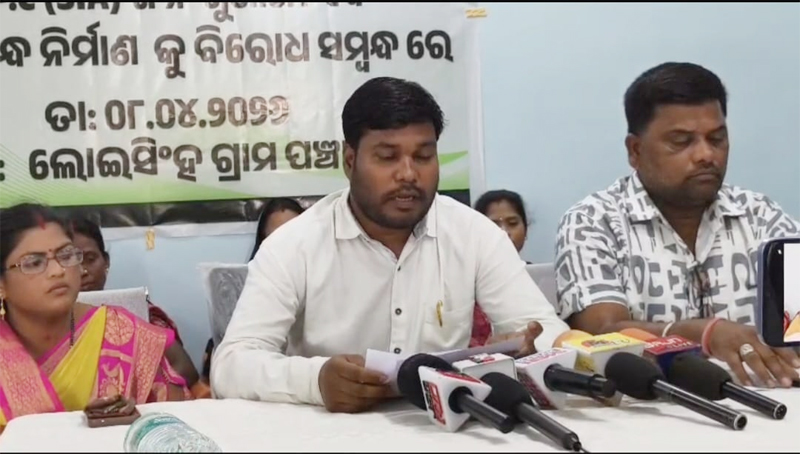
However, villagers from Loisingh, Chandnimal, Rajpur, and Gaudmal panchayats strongly opposed the proposal, citing fears of environmental degradation, health hazards, and possible displacement. Many questioned the rationale behind acquiring land in Jharsuguda when the main Darlipali plant is located in neighbouring Sundargarh district, urging authorities to utilise available land there instead.
Residents also demanded assured employment for local youth and faster development initiatives in affected areas.
Sarpanches from the four panchayats alleged procedural lapses, calling the hearing “illegal” due to lack of transparency. Loisingh Sarpanch Sanatan Rohidas claimed that the notice for the hearing was issued only three days in advance, instead of the mandated 14 days, and alleged that several participants were not allowed to express their views freely.
Environmental concerns dominated the proceedings, with locals highlighting pollution caused by existing ash ponds, which they said had contaminated nearby areas and the Basundhara river, affecting drinking water and posing serious health risks, particularly for tribal and marginalised communities. They warned that the proposed ash dyke would exacerbate the situation.
The panchayat representatives demanded that the SIA report be made publicly accessible and shared with all affected households well in advance. They also called for a fresh public hearing and urged authorities to put the expansion project on hold if public opposition persists.
