
NTPC Bongaigaon Supports Golden Langur Conservation through Artificial Canopy Bridge Project in Kokrajhar

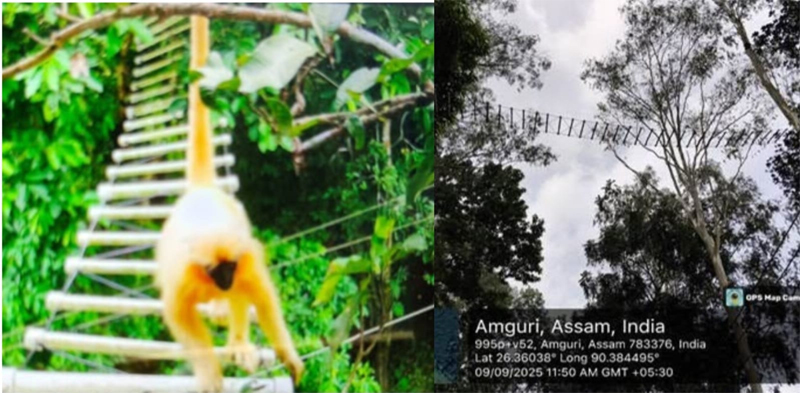
Bongaigaon: Strengthening its commitment to environmental sustainability and biodiversity conservation, NTPC Bongaigaon supported an innovative project to protect the endangered Golden Langur by establishing Artificial Canopy Bridges in the Nadangiri–Baxamara–Amguri–Nayekgaon–Chakrashilla Forest Complex of Kokrajhar district.
The project, titled “Establishing Artificial Canopy Bridges as Road Overpass and Linking Populations of Endangered Golden Langur through Village Corridor in Nadangiri–Baxamara–Amguri–Nayekgaon–Chakrashilla Forest Complex, Kokrajhar, Assam, India,” was implemented during FY 2025–26 with financial support of ₹10 lakh from NTPC Bongaigaon under its Sustainable Development initiatives.
The initiative was implemented in collaboration with the Haltugaon Forest Division and the Primate Research Centre, North-East India, bringing together institutional support, scientific expertise and field-level conservation measures for the long-term protection of the Golden Langur.
The Golden Langur (Trachypithecus geei) is one of the world’s rarest primates and is found mainly in western Assam and neighbouring Bhutan. The species faces increasing threats from habitat fragmentation, shrinking forest corridors and expanding road networks. As forest canopies become disconnected, these tree-dwelling primates are often compelled to descend to the ground and cross roads, exposing them to vehicular collisions, injuries and other human-induced risks.
To address this challenge, six Artificial Canopy Bridges were installed at strategically identified locations across the Nadangiri–Baxamara–Amguri–Nayekgaon–Chakrashilla forest landscape. These aerial bridges connect fragmented tree canopies and provide a safer passage for Golden Langurs to move between forest patches without descending onto the road surface.
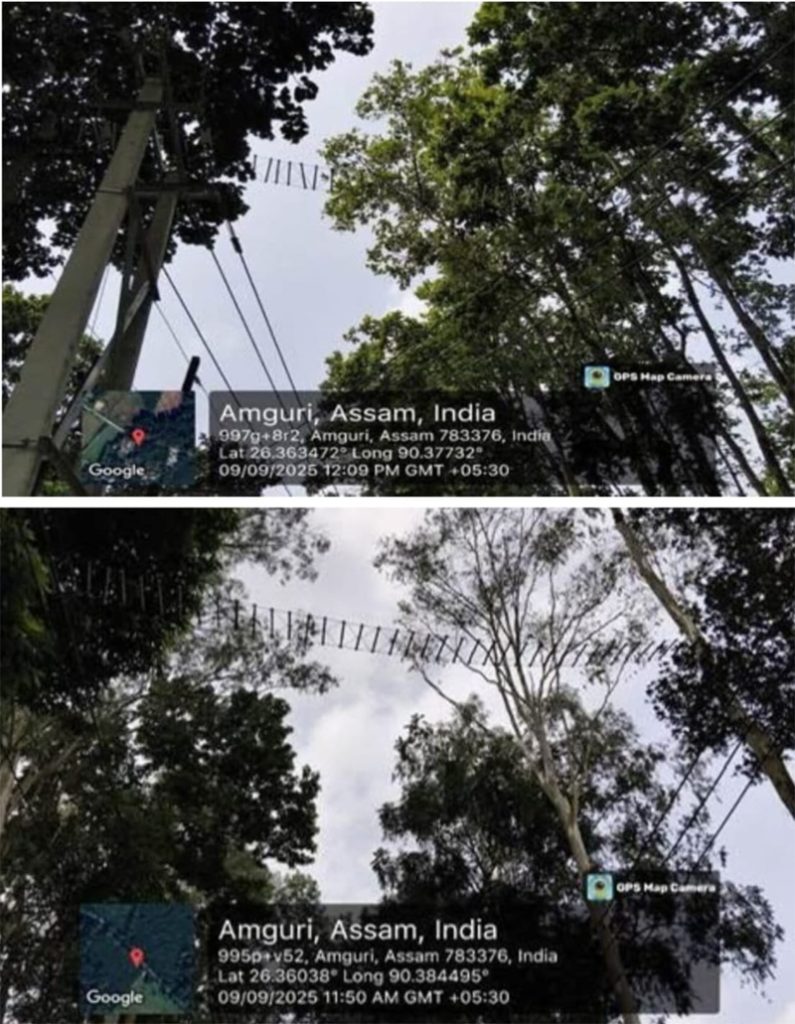
The intervention is expected to improve habitat connectivity, reduce the risk of road-related mortality and facilitate the safe movement of Golden Langurs between isolated forest patches. Improved connectivity may also support genetic exchange between separated populations, which is important for the long-term survival and ecological resilience of the species.
To scientifically assess the movement of wildlife and utilisation of the canopy bridges, three camera traps were installed at selected locations. The monitoring system will help researchers document langur movement, study behavioural patterns, evaluate the effectiveness of the bridges and generate conservation data for future planning.
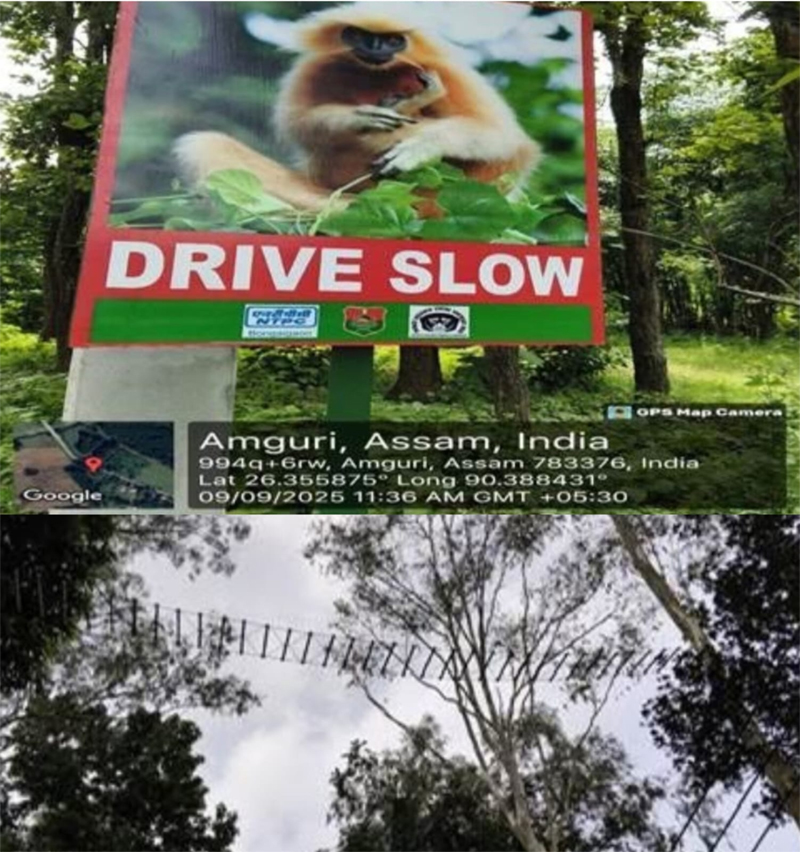
The project also included the installation of four wildlife awareness and road-safety signages along critical stretches of the corridor. The signages urge motorists to reduce speed and exercise caution while travelling through ecologically sensitive areas. They also help create awareness among local communities and road users about the presence of Golden Langurs and the need to protect their habitat.
As part of the habitat restoration component, 2,000 saplings of native tree species were planted in the project area. The plantation initiative aims to enhance green cover, improve habitat quality and gradually strengthen natural canopy connectivity across the landscape.
The project seeks to create long-term conservation outcomes by combining wildlife-friendly infrastructure, scientific monitoring, habitat restoration and public awareness. It also encourages greater involvement of local communities and stakeholders in protecting the unique biodiversity of the region.
The initiative reflects NTPC Bongaigaon’s broader approach towards responsible and sustainable development. Along with fulfilling its core responsibility of generating reliable power for the nation, the station continues to support meaningful environmental and community-based interventions across Kokrajhar and the Bodoland Territorial Region.
The Golden Langur Canopy Conservation Project demonstrates how collaboration among a public-sector enterprise, the Forest Department and scientific institutions can provide practical solutions to complex conservation challenges. The project is expected to contribute significantly to safeguarding one of Assam’s most distinctive and endangered primate species for future generations.
Project Highlights
The project was funded by NTPC Bongaigaon with an amount of ₹10 lakh under its Sustainable Development initiatives during FY 2025–26. It was implemented jointly with the Haltugaon Forest Division and the Primate Research Centre, North-East India, in the Nadangiri–Baxamara–Amguri–Nayekgaon–Chakrashilla Forest Complex of Kokrajhar district.
Under the project, six Artificial Canopy Bridges were installed at strategically selected locations to provide safe aerial passage to Golden Langurs and other arboreal wildlife. These bridges are intended to reconnect fragmented forest canopies and reduce the need for the animals to descend onto roads.
For scientific monitoring, three camera traps were installed to document wildlife movement and assess the utilisation and effectiveness of the canopy bridges. The information generated through the monitoring pro.cess will support future conservation planning and habitat-management decisions.
The project also established four wildlife awareness road signages along critical road stretches to encourage cautious driving and sensitise road users and nearby communities about the conservation needs of the Golden Langur.
In addition, 2,000 native tree saplings were planted to increase green cover, restore habitat and strengthen ecological connectivity within the project landscape. Together, these interventions aim to reduce road-related mortality, facilitate safe movement and genetic exchange, restore fragmented habitat and promote community participation in wildlife conservation.
