
Odisha Craft Odyssey Presents MOLTEN MONOLITH, a Research Exhibition Exploring the Living Traditions of Dokra

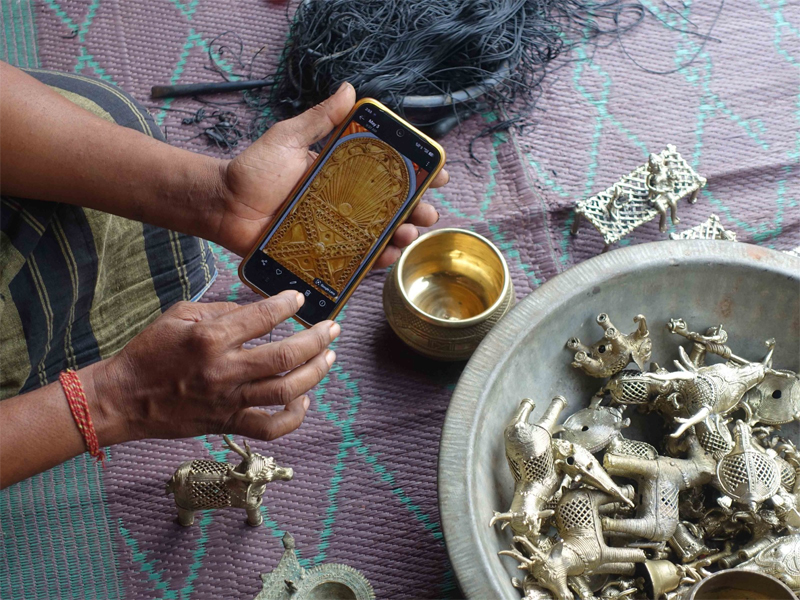
Bhubaneswar : Odisha Craft Odyssey (OCO) presents MOLTEN MONOLITH, a research exhibition emerging from the third edition of its Residency Programme, which explores the histories, material knowledge and contemporary practices of Odisha’s Dokra metal-casting tradition. Curated by Sibdas Sengupta, the exhibition brings together the research and artistic explorations of three residents – Reema K., Muskaan Singh and Tejal Kawachi – alongside contributions from master artisans of Dhenkanal’s Dokra craft clusters. The exhibition preview will take place on Friday, 27 November 2026, from 5:00 PM onwards at Lalit Kala Akademi, Bhubaneswar, and will remain open until 7 December 2026.
An initiative dedicated to documenting and exploring Odisha’s diverse craft traditions, OCO has previously undertaken residencies focusing on Kansa (bell metal) in 2024 and Pipili’s Chandua appliqué tradition in 2025. Continuing this research journey, the third edition turned its attention to Dokra, bringing together artists and researchers through an open call. Following the selection process, three residents – Tejal Kawachi, a visual artist and photographer; Dr. Reema K., an independent researcher specialising in visual culture, ethnography and contemporary South Asian art; and Muskaan Singh, a contemporary artist working across visual art, literature and vernacular idioms – were selected for the programme.
MOLTEN MONOLITH examines Dokra beyond its finished objects, looking at how the craft has evolved, how it is understood and represented, and what gets overlooked when attention remains limited to its aesthetic and commercial value. The exhibition questions conventional institutional narratives around craft by bringing forward the processes, histories and perspectives that shape the practice, while examining the relationship between traditional knowledge and contemporary interpretations.
A defining feature of the exhibition is the direct involvement of master artisans in its presentation. Rather than limiting their presence to the subject of the residents’ research, MOLTEN MONOLITH incorporates their contributions into the exhibition itself. These include raw casting fragments, traditional utilitarian vessels and collaborative artefacts by artisans Bijuli Majhi, Chandan Majhi, Golap Gadtia, Hemanta Majhi, Jaya Maharana, Jhunu Dehuri, Pabitra Dehuri, Ramesh Majhi, Sabita Pradhan, Sanatan Pradhan and Trinath Behera. Their work offers visitors an insight into the different stages, forms and applications of Dokra, placing the practitioners’ work in direct dialogue with the residents’ contemporary explorations.
Speaking about the curatorial approach, curator Sibdas Sengupta said, “We witness the craft object and the artisans as active participants in this curatorial exercise. For us, it is important to look beyond the finished object and understand the processes, choices and experiences that give it meaning. The exhibition brings these perspectives together, allowing the artisans’ voices and contributions to shape how Dokra is presented and understood.”
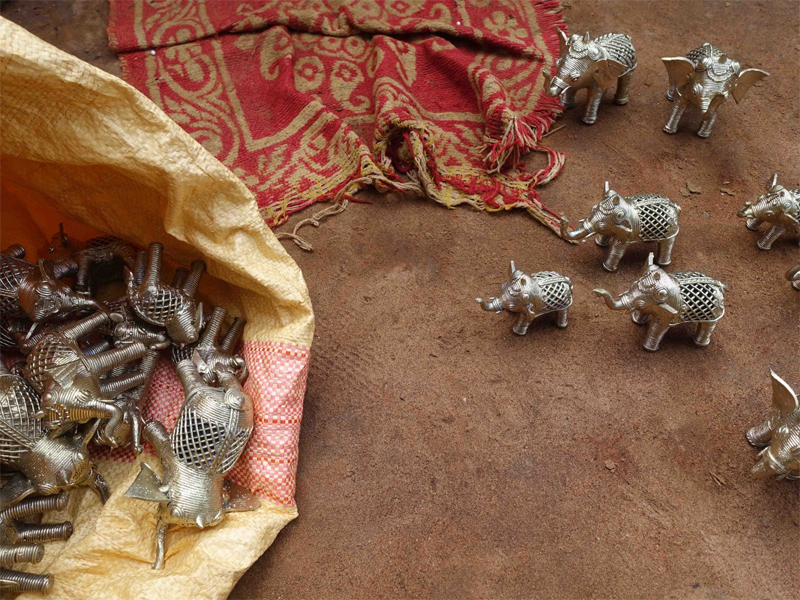
The three residents have approached Dokra through distinct yet interconnected research frameworks. Reema K.’s research examines the fragmented histories of Dokra, alongside the intellectual and material engagements of its practitioners with the craft. Her inquiry considers how the practice has been documented and understood, while exploring the histories and knowledge systems that inform its continuity.
Commenting on the larger vision behind the initiative, Sandeep Hota, Co-founder and Managing Director, BEADS, and Advisory Board Member, Odisha Craft Odyssey, said, “Through Odisha Craft Odyssey, we aim to explore craft traditions beyond their finished forms, bringing attention to the histories, knowledge and people behind them. MOLTEN MONOLITH brings together artists, researchers and master artisans to create new perspectives on Dokra while recognising the knowledge and lived experiences of the communities that sustain this tradition.”
The programme will begin with an Academic Colloquium on 29 November 2026, focusing on counter-archives and artisanal sovereignty. A Curatorial and Researchers’ Walkthrough on 2 December will offer audiences an opportunity to engage with the exhibition’s research and curatorial framework.
On 5 December, a specialised workshop titled Recasting the Fragment will explore ethical wax-modelling practices in engagement with master artisans. This will be followed on 6 December by A Tale/Tail Left Untold, a collaborative community performance conceived by Muskaan Singh with local children, followed by a final exhibition walkthrough.
Through its exhibition and accompanying programme, MOLTEN MONOLITH invites audiences to look at Dokra from multiple perspectives – as a craft, a body of knowledge and an evolving cultural practice – while engaging with the people and processes that continue to shape its future.
