
ADVANCING CARDIAC CARE IN WESTERN ODISHA: APOLLO HOSPITALS ROURKELA’S FIRST APPROACH TO CONGENITAL & ADULT HEART TREATMENT.

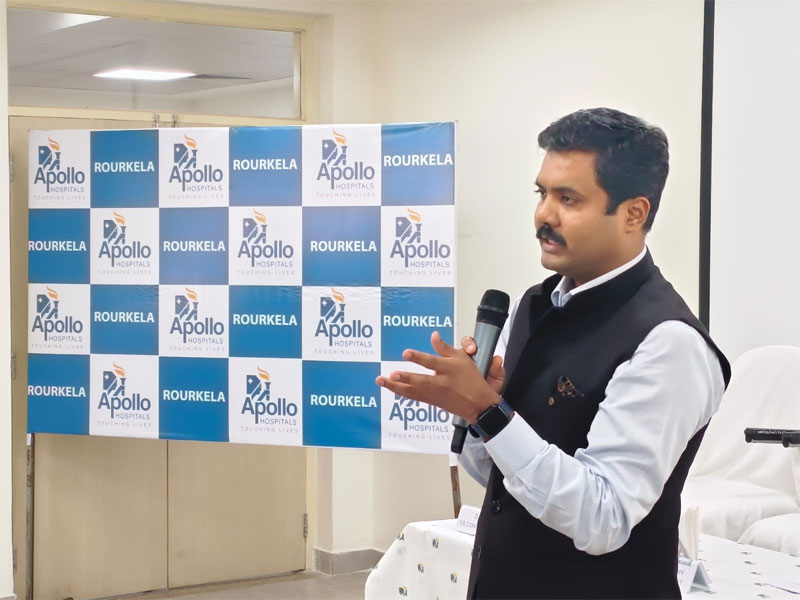
1ST TIME IN WESTERN ODISHA: “TEE” GUIDED ASD DEVICE CLOSURE, 3 TESLA MRI COMPATIBLE SMALLEST AVEIR PACEMAKER (ABBOTT USA), CRT-D, PDA DEVICE CLOSURE, LEADLESS PACEMAKER MICRA, AICD AND LBBB PACING AT APOLLO HOSPITALS, ROURKELA
Rourkela: Apollo Hospitals, Rourkela is a leading healthcare provider committed to offering innovative medical treatments and compassionate care. Our expert team of physicians, nurses, and support staff works together to provide comprehensive, patient-centred care across a range of specialties, including cardiology, neurology, orthopaedics, and more.
Apollo Hospitals, Rourkela is proud to announce the successful completion of a cutting-edge Atrial Septal Defect (ASD) closure procedure, marking a significant milestone in the treatment of congenital heart conditions first time in the western part of Odisha. The procedure, which took place at the hospital’s state-of-the-art cardiac unit, was performed by a team of expert cardiologists and cardiac surgeon and is set to improve the quality of life for patients suffering from ASD.
Atrial Septal Defect, a congenital heart condition where there is a hole in the wall between the two upper chambers of the heart, affects thousands of individuals worldwide. If left untreated, ASD can lead to complications such as heart failure, stroke, and arrhythmias. Fortunately, with advances in medical technology, the closure of ASD is now more effective than ever.
The innovative procedure involves the use of a minimally invasive approach, which eliminates the need for open-heart surgery. Using a catheter-based technique, a device is placed to close the defect, significantly reducing recovery time and improving patient outcomes.
At Apollo Hospitals, Rourkela, Dr Ashish Hota, Sr. Interventional Cardiologist comments: Mrs. S.M, 52 yrs female presented with shortness of breath for one year. ECHO cardiography revealed a large ASD. She was referred to Apollo Hospitals, Rourkela. Management of such large ASD in late presentation is often challenging. With increase in age, ASD leads to pulmonary arterial hypertension and reversal of shunt. In such scenario device closure or surgical closure do more harm than benefits. This requires a complex hemodynamic and cardiac catheterization study to conclude utility of intervention. We did cardiac catheterization study and luckily it was in favour intervention(device closure/surgical closure).
Team Approach: We have a structural interventional team including CTVS surgeon Dr. Sameer Kumar Panigrahy and Cardiac Anaesthetist Dr. Subhajit Sahu. Our team decided to go for a trial of device closure which has a benefit of short hospital stay and early recovery.
Technical challenge: Device closure of large ASD is technically challenging with risk of embolization, erosion and procedural failure. Therefore, we planned this procedure under TEE guidance on short GA with a surgical back up. In this case Dr. SameerKumarPanigrahy, Sr. Consultant CTVS provided excellent CTVS support&Dr. Subhajit Sahu provided excellent TEE guidance during the procedure.
At Apollo Hospitals, Rourkela, Dr. Subhajit Sahoo,. Consultant Cardiac Anaesthesiology Comments: Transoesophageal Echocardiography (TEE) is a vital imaging tool in both cardiac surgery and Cath lab interventions. It provides real-time, high-resolution images of the heart, allowing for accurate assessment and immediate guidance during procedures.
In the operating room, TEE helps evaluate valve repairs, monitor heart function, and detect complications intraoperatively. In the Cath lab, it is essential for guiding structural heart procedures such as TAVR, Mitra Clip, ASD closures, and left atrial appendage devices.
TEE enhances safety, improves outcomes, and supports precise, patient-focused cardiac care.
As a specialized cardiac anaesthetist at a leading tertiary care centre, I am pleased to highlight the transformative role of Transoesophageal Echocardiography (TEE) in modern cardiac care, both in the operating theatre and Cath lab settings.
TEE is a minimally invasive imaging technique that provides high-resolution, real-time views of cardiac structures. It has become an indispensable tool in cardiac anaesthesia and interventional cardiology due to its superior diagnostic accuracy and intra-procedural guidance capabilities.
Pulmonary oedema: Peri procedural pulmonary oedema is common in such cases, but prior hemodynamic study revealed minimal risk for pulmonary oedema. The procedure was done on 19-04-2025, patient is hemodynamically stable and the patient is discharged.
Lesson: Device closure of ASD isa minimally invasive catheter-based procedure with excellent result in suitable candidate. This requires team approach and expert decision making to provide best outcome with short hospital stay with almost cure of the disease.
Apollo Hospitals, Rourkela has experienced 1st peripheral angioplasty of 85yrs old male patient with severe leg pain with 100% occlusion of leg artery…pt now on follow up since 2yrs and his leg saved.
1st CRT-D cardiac resynchronising therapy done in a 70yrs old lady with dilated cardiomyopathy with severe lv systolic dysfunction. Now pt improved and on follow up since 1 yr
1st LBBB PACING done which is a physiological pacing done in a 40yrs male patient now doing well
Carotid angioplasty done in an old male with bilateral carotid stenosis with recurrent episodes of stroke
1st AVEIR leadless pacemaker by ABBOTT USA done by Dr Millan Kumar Satapathy, Sr. Interventional Cardiologistrecently in an old pt with previous conventional pacemaker implant due to difficult in lead negotiations due to vascular inaccessibility during changing of PG and defective lead.
