

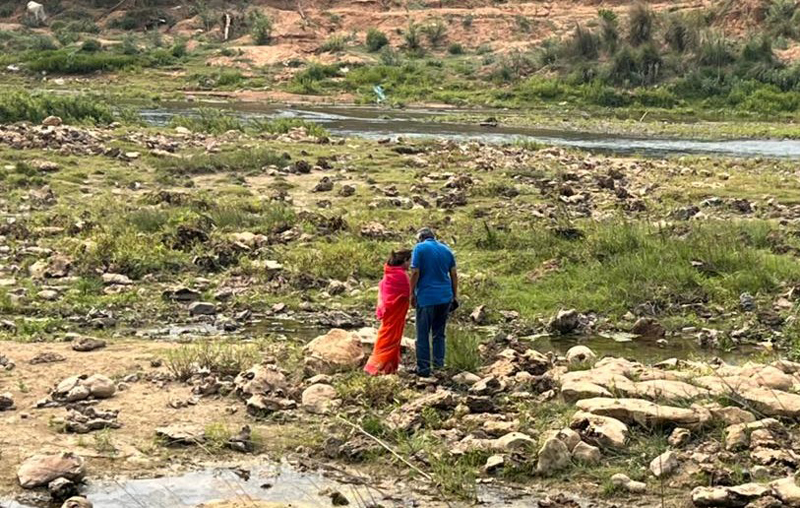
“The fossil assemblage includes shark teeth, batoids (rays), fish remains, molluscs, and microfauna, representing a highly diverse prehistoric marine ecosystem. These findings provide crucial insights into past climatic conditions, marine transgression events, and paleo-environmental evolution of eastern India. The locals have named the fossil bed as “Asura Hada” (Demon Bones), and shun the place. “
Baripada 10th April: The Mayurbhanj Chapter of Intach has appealed to the Government of Odisha to establish a Fossil Park at the Budha Balanga River near Baripada. Even though this ground breaking paleontological discovery has been reported multiple times in the last few decades, the authorities have not taken heed of its importance. The site is a treasure trove of well- preserved prehistoric marine life, petrified and ossified, buried in the sand of the river bed. The few fossils that have been studied represent a diverse array of marine species and offer a vivid glimpse into life millions of years ago.
The region, commonly referred to as the “Baripada Fossil Beds,” extending across Satpautia, Usurudihi, Itamundia, and Mukuramatia villages, preserves a remarkable assemblage of marine fossils dating back approximately 12–15 million years (Miocene epoch). Scientific investigations have established that this region was once part of a shallow marine environment connected to open seas. The fossil assemblage includes shark teeth, batoids (rays), fish remains, molluscs, and microfauna, representing a highly diverse prehistoric marine ecosystem. These findings provide crucial insights into past climatic conditions, marine transgression events, and paleo-environmental evolution of eastern India. The locals have named the fossil bed as “Asura Hada” (Demon Bones), and shun the place. On a field visit to the site, the Intach team uncovered numerous fossilized remains of crocodiles, turtles, partial skulls, as well as fossil bones of marine creatures.
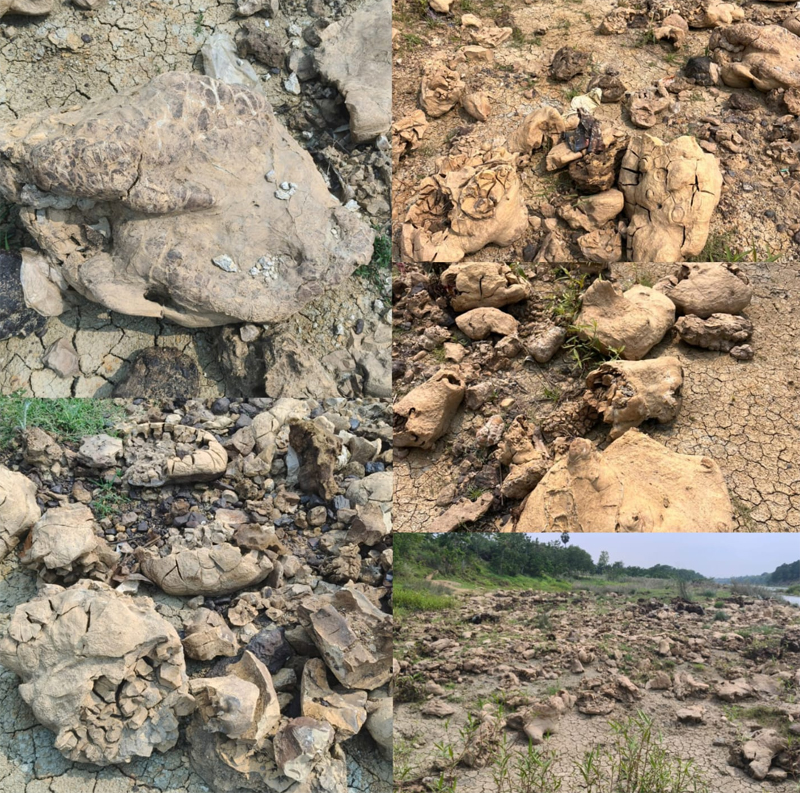
According to Anil Dhir, the Convener of Intach’s Bhubaneswar Chapter, the site tells fascinating stories about the evolution of life in the region over the past tens of millions of years. Preserving this heritage is not only a scientific responsibility but also a visionary step toward promoting Odisha as a global geo-tourism destination. Dhir further said that out of the sixteen fossil parks in India, the Geological Survey of India manages four Fossil Parks, three of which are forest fossils and one vertebrate. Besides these, there are twelve more fossil parks with dinosaur and vertebrate remains, but none for marine life. If the Baripada Fossil Site is given the Geo-heritage tag, it will be the first Marine Fossil Park of the country.
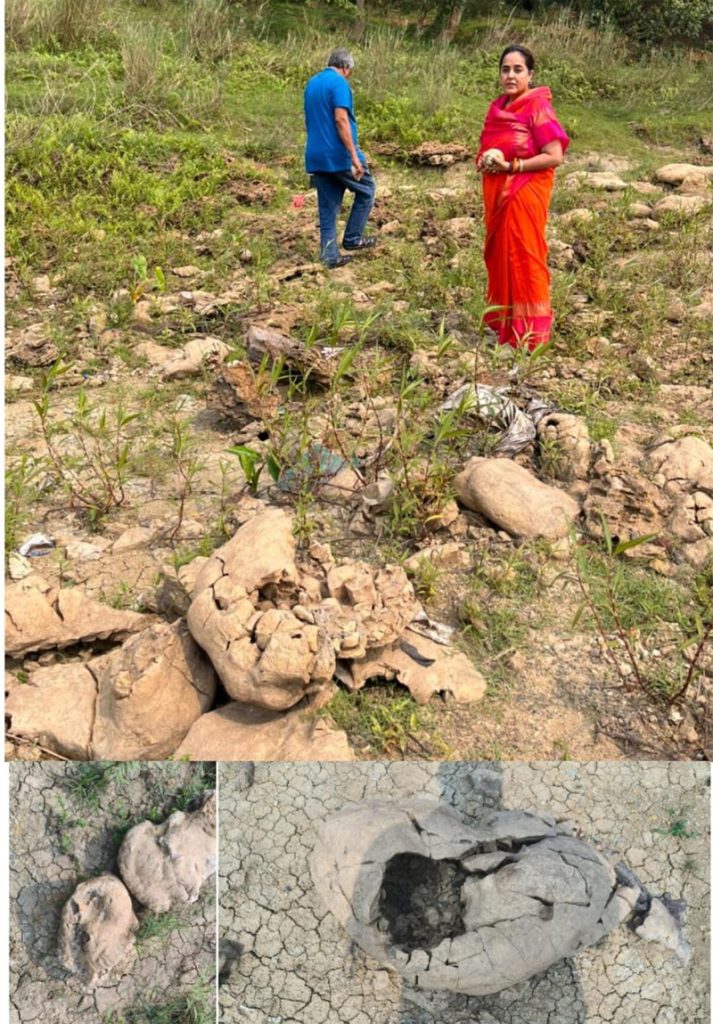
Maharani Rashmi Rajya Laxmi Bhanj Deo, the Convener of Intach’s Mayurbhanj Chapter, has written to the authorities to declare the place as a State Geo-Heritage Site to ensure legal protection and conservation. Setting up of a proper Fossil Park and Interpretation Centre, with a curated Fossil Museum showcasing the fossil diversity will promote scientific research and preservation of the in-situ fossil exposures. The entire area should be fenced and sand mining not allowed. The Baripada Fossil Beds represent a 12-million-year-old natural archive of Earth’s history, offering immense potential for research, education, and sustainable tourism.
