

Bibhuti Pati
India is likely to have expressed its apprehensions regarding the delays in defense supplies, particularly concerning the S400 missile systems. An agreement was reached to enhance bilateral trade, which is essential for both nations as they continue to be affected by sanctions. Currently, ninety percent of Indo-Russian trade is being carried out in local currencies, circumventing the Western-led financial system, which raises concerns for the United States.
The joint statement conveyed that India is no longer merely a buyer of Russian equipment. From this point forward, it will participate in collaborative research, development, and production. Russia will provide its defense technology, which the West is reluctant to share. In exchange, India will set up pharmaceutical and fertilizer enterprises in Russia. This arrangement will allow both nations to circumvent Western sanctions while creating new market opportunities. India is already engaged in the joint manufacturing of the BrahMos missile and the licensed production of AK-203 rifles.
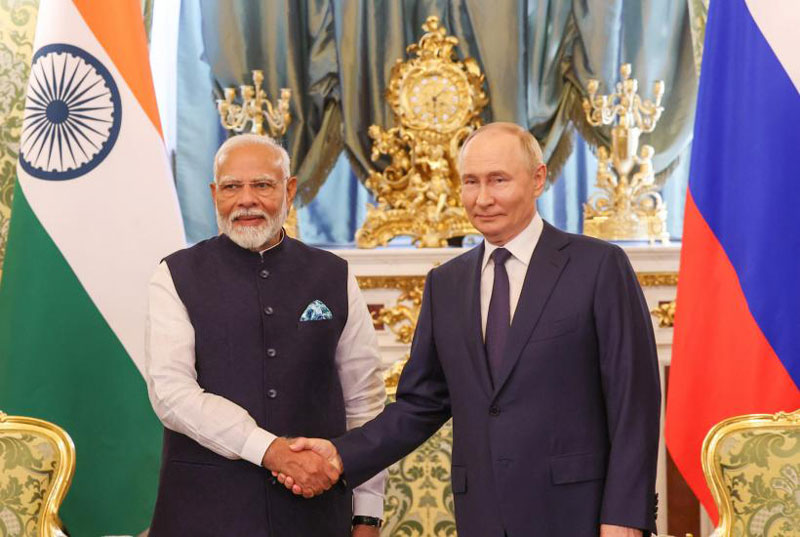
The dinner hosted by PM Modi was the most significant aspect of the visit. It is likely that important discussions, including those regarding the Ukraine war and future procurements, occurred there. Additionally, it is at this dinner that PM Modi would have expressed his perspectives on the Ukraine conflict. The intention of New Delhi to invite the Ukrainian President early next year reflects India’s aim to engage with both parties, showcasing its commitment to peace and its global diplomatic efforts.
India, by refraining from the announcement of defense and energy agreements, indicates its desire to preserve relationships with both the West, spearheaded by the United States, and Russia. This also reflects New Delhi’s aim to strengthen its trade connections with both parties involved. India is on the path to becoming the world’s third-largest economy and presents a highly attractive market.
Consequently, it is in a position to secure advantageous trade agreements, which it is currently pursuing. Although the optics were impressive, the outcomes suggested that India will refrain from taking sides against any group. Furthermore, it will not endorse any faction in a conflict but will advocate for peace through dialogue. The global community observed the visit with keen interest, anticipating announcements that could be scrutinized, yet none materialized. Both countries managed their strategies effectively, showcasing that their relationship is both mature and well-established. Most significantly, New Delhi communicated its capability to engage with rival factions.
The visit conveyed several messages, despite the fact that the number of deals finalized was less than anticipated. Firstly, it showcased the strong relationship between the two nations, as each has supported the other in the face of shifting global dynamics. Secondly, India reaffirmed its commitment to maintaining strategic autonomy, as New Delhi stood firm against Western criticism of Putin. Thirdly, India refrains from joining the West in attributing blame to Russia for the Ukraine conflict, instead advocating for a negotiated resolution. As Prime Minister Modi stated, ‘India is not neutral; India is on the side of peace.’ Fourthly, although no defense agreements were finalized, proposals were made that will be pursued further. The message from Russia indicated a commitment to respecting India’s policy of self-sufficiency. For Moscow, the visit also yielded significant outcomes, particularly demonstrating that Putin cannot be isolated.
His recent trips to Alaska, China, and now India indicate that he remains in demand, despite the various sanctions imposed. This situation is likely to resonate positively with the Russian public. Furthermore, the relationship between India and Russia continues to be strong. Additionally, both countries are advocating for a multipolar world, in contrast to the bipolar model favored by China or the unipolar vision promoted by Washington. Lastly, Russia has made it clear that, despite its expanding partnership with China, which circumvents sanctions, its relationship with India is not compromised. The lack of announcements regarding defense and oil was a deliberate choice. Although attractive defense and oil proposals were presented, there was no formal acceptance. Currently, the Russian defense sector is focused on the ongoing conflict, while India aims to steer clear of further sanctions from the United States.
Notably, Putin’s trip to India occurs just six weeks prior to the arrival of German Chancellor Friedrich Merz, along with the EU’s Ursula Von Der Leyen and Antonio Costa, who will serve as chief guests for Republic Day and participate in the EU-India Summit. The global community observed as India extended a warm welcome to Putin, an event of such grandeur that is seldom witnessed. This visit also came on the heels of Russia’s partial dismissal of the US peace proposal regarding the Ukraine conflict; Moscow is cognizant of its advantageous position. Interestingly, the relationship between India and Russia, particularly in light of the Ukraine conflict, has been under US scrutiny for various reasons.
In 2022, shortly after the onset of the Ukraine conflict, the Biden administration considered the possibility of imposing sanctions on India for acquiring Russia’s S400 missile systems in accordance with the Countering American Adversaries through Sanctions Act. However, they did not raise concerns regarding India’s oil purchases.
The Trump administration, on the other hand, expressed reservations about oil acquisitions but refrained from commenting on Indo-Russian defense agreements. Both the Biden and Trump administrations operate under the assumption that India’s procurements have contributed to the strengthening of Russia’s military efforts. This is notable given that the United States also imports raw materials from Russia. Such threats prompted India to reassess its procurement strategies. Consequently, India expanded its defense acquisitions and bolstered its Aatmanirbhar Bharat initiatives.
