
Fourth Edition of Kathmandu Kalinga Literary Festival Concludes on a High Note, Strengthening India–Nepal Cultural Ties

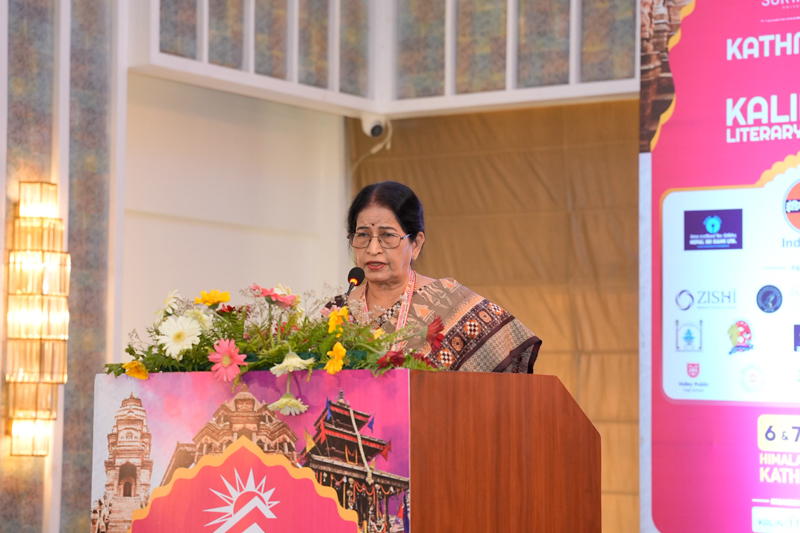
Kathmandu: The fourth edition of the Kathmandu Kalinga Literary Festival (KLF) concluded successfully after two days of vibrant literary, cultural, and intellectual engagement at Hotel Himalaya, Lalitpur, Nepal. Bringing together acclaimed authors, artists, scholars, thinkers, and cultural practitioners from across South Asia, the festival reaffirmed its position as a significant platform for fostering dialogue, creativity, and cross-border cultural understanding.
Held under the theme “Beyond Borders – South Asian Literature in a Changing World: Towards the Imagination of a Shared Future,” the festival was inaugurated by former Chief Justice of Nepal Sushila Karki. The event celebrated the rich literary and cultural heritage of South Asia while exploring contemporary challenges and opportunities for regional cooperation and shared cultural imagination.
One of the major highlights of the opening day was an engaging conversation with renowned Indian actor, writer, poet, and musician Piyush Mishra. During the session titled “Tumhari Aukaat Kya Hai Piyush Mishra,” moderated by Yunus Khan, Mishra reflected on his childhood, artistic journey, passion for theatre, struggles, and his autobiography. His candid insights resonated deeply with the audience.
Another widely appreciated session featured celebrated singer, actress, and theatre personality Ila Arun, who shared anecdotes from her life and discussed her autobiography “Choli Ke Peeche” during the session “Pardey Ke Peeche.”
The festival also showcased several important discussions on Nepali literature and culture, including sessions such as “The Global Voice of Nepali Poetry” and “Challenges of Literary Festivals.”
Addressing the inaugural session, Ranjana Niraula, Festival Director of Kathmandu KLF, emphasized the transformative power of literature in connecting people across borders. “Literature is not confined to words and books; it is a celebration of ideas, culture, memory, emotions, and human potential. This festival is not merely a literary gathering but a shared platform that nurtures understanding and intimacy among people. Literature transcends geographical boundaries and builds invisible bridges between human beings,” she said.
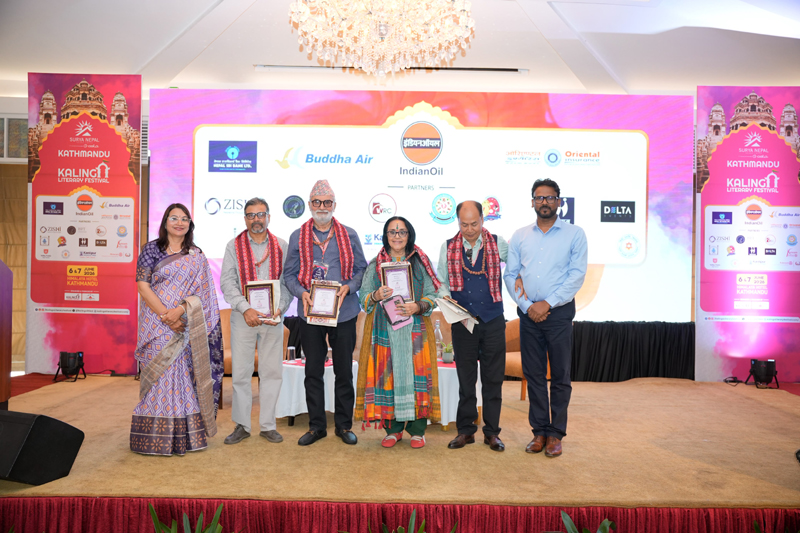
The second day continued with a series of thought-provoking discussions covering literature, cinema, music, satire, society, and cultural transformation. Sessions such as “Songs: To Listen or to Watch?”, “Cinema: Yesterday, Today, and Tomorrow,” “A Discount Suggestion to Rajendra Khadgi,” “Mantha: Karnali Rising,” “Living Civilizations: Society, Culture and Change,” and “Humor and Satire: Old Laughter, New Jokes” attracted enthusiastic participation from audiences.
A special session titled “Words that Sing: Raj Shekhar on Poetry, Cinema, and the Lyricist’s Craft” featured noted lyricist Raj Shekhar in conversation with Sampada Malla, offering unique insights into the creative process behind songwriting and storytelling.
The festival witnessed the participation of distinguished literary and cultural personalities including Pratibha Ray, Vikas Swarup, Paramita Satpathy, Upendranath Behera, Badri Narayan, Neena Verma, Archana Singh, Jayaprakash Pandey, Kula Saikia, Malini Awasthi, Narayani Basu, Satish Padmanabhan, Yatindra Mishra, Sandeep Singh, Vikram Sampath, Anant Vijay, Yatish Kumar, Ashutosh Agnihotri, Sujit Kumar, and Yunus Khan, among others.
The discussions broadly focused on three interconnected themes—literature and arts of India, literature and arts of Nepal, and subjects of public interest highlighting the deep cultural, historical, and intellectual ties between Nepal, India, and the wider South Asian region.
Adding a rich cultural dimension to the festival were captivating performances of songs, poetry, and ghazals in Nepali, Hindi, and Urdu. These performances drew large audiences and showcased the shared artistic traditions of South Asia.
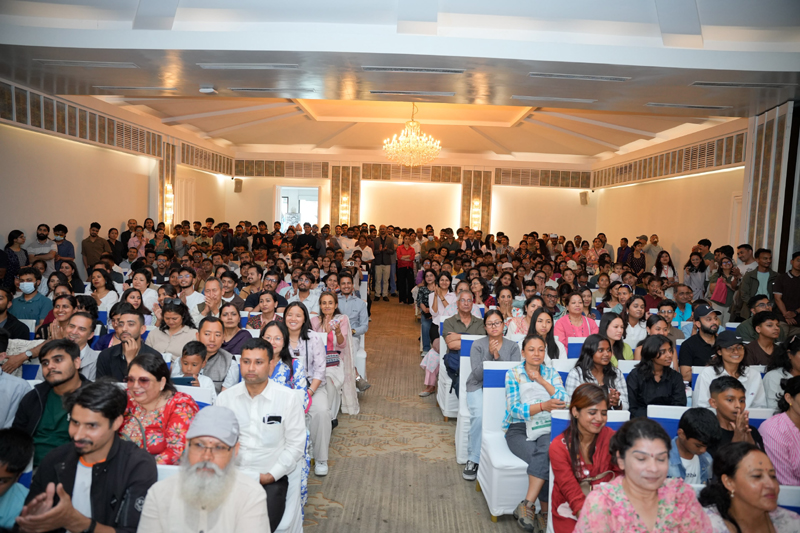
The concluding session featured renowned motivational speaker and philosopher Acharya Prashant, who joined virtually from the United Kingdom. Despite being conducted through live video streaming, the session attracted an exceptionally large and enthusiastic audience.
Expressing satisfaction over the festival’s success, Rashmi Ranjan Parida, Founder-Director and Curator of the Kathmandu Kalinga Literary Festival, noted that this year’s edition recorded significantly higher participation compared to previous years. He said the festival would continue to serve as an important platform for promoting South Asian literature, arts, and culture while strengthening the enduring bonds between Nepal and India.
The successful conclusion of the fourth Kathmandu Kalinga Literary Festival once again demonstrated the power of literature and culture to transcend borders, inspire dialogue, and create pathways toward a shared and inclusive future for South Asia.
