
Threads of Empowerment: How Chandrakanti Jena is Preserving Odisha’s Applique Heritage While Creating Sustainable Livelihoods

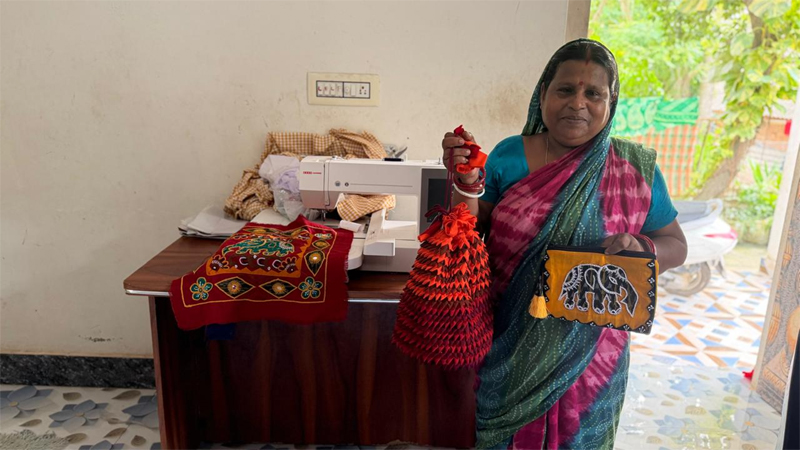
Balasore, July 24, 2026 For years, embroidery was simply a skill that Chandrakanti Jena, a 52-year-old artisan from Srirampur village in Odisha’s Balasore district, practised with dedication. Today, that skill has become the foundation of a thriving enterprise that creates livelihood opportunities for dozens of rural women.
Her journey began in 2012 when she started working with applique craft. A six-month training programme at the District Industries Centre (DIC) provided the technical foundation, while years of practice honed her skills. However, like many rural artisans, Chandrakanti found it difficult to move beyond traditional designs and limited local markets.
A turning point came in 2023 when she participated in a design and product development training programme organised by Tata Steel Foundation. The programme introduced her to contemporary designs, product diversification and market-oriented approaches. What began as a traditional craft soon evolved into a growing business catering to modern consumer preferences. Today, Chandrakanti produces a wide range of handcrafted products, including home decor items, bed sheets, cushion covers, tote bags, purses, pouches and festive products such as rakhis. Her enterprise also manufactures school uniforms and customised applique products for bulk orders.
Alongside building her own enterprise, Chandrakanti has focused on empowering women in her community. Following the training, she helped establish the Subarna Saheli Applique Producer Group, which now brings together nearly 60 women artisans. She has personally trained around 30 women in applique work, while members of 22 Self-Help Groups contribute to various stages of production, from procuring raw materials to stitching and finishing products.
With support from Tata Steel Foundation, the group received an advanced embroidery machine and specialised training to operate them. The Foundation also facilitated access to exhibitions, business events and markets beyond Odisha. Today, Chandrakanti’s products are sold through Mission Shakti Bazaars and exhibitions across cities such as Delhi, Bengaluru and Pune. The business has grown steadily over the years. In FY25, the enterprise recorded an annual turnover of approximately ₹38 lakh, generating profits of nearly ₹26 lakh. Chandrakanti now earns around ₹15,000 per month, contributing significantly to her family’s income while enabling many other women to earn from home.
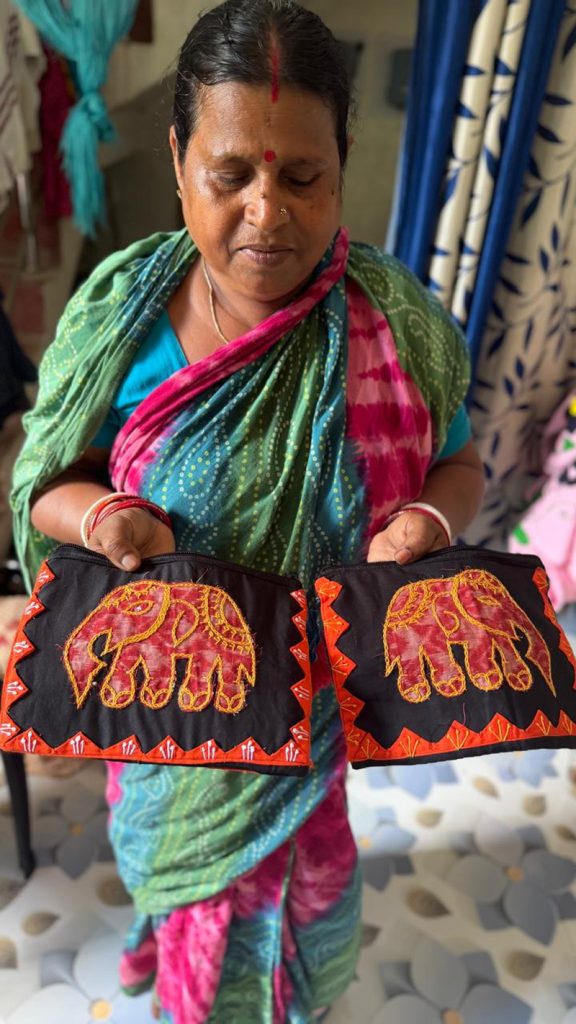
Technology has become an important part of her entrepreneurial journey. With support from Tata Steel Foundation, Chandrakanti attended the India AI Impact Summit held at New Delhi. Initially unfamiliar with even basic smartphone functions, she began exploring Artificial Intelligence (AI) to understand market trends, identify popular designs, learn pricing strategies and prepare for exhibitions. Today, AI helps inform her business decisions and keeps her updated on changing customer preferences and emerging opportunities.
Her journey has not been without challenges. When her husband suffered a brain stroke, Chandrakanti became the primary earner for her family. The enterprise she had built helped her navigate this difficult period while continuing to support the women associated with the producer group.
“Tata Steel Foundation has been much more than a training partner in my journey. From skill development and machinery support to market linkages, product design, raw material guidance and opportunities to showcase my work on national platforms, the Foundation has supported me at every step. This exposure has not only helped my business grow but has also strengthened my confidence,” shares Chandrakanti. One of her proudest memories was boarding a flight for the first time to attend the AI Summit. “It was my first flight,” she recalls with a smile. “I was nervous, but also excited. The experience opened my eyes to new possibilities.”
Looking ahead, Chandrakanti hopes to build a larger artisan cluster, train 150–200 women, secure more bulk orders and strengthen partnerships with government institutions. Her journey demonstrates how the right support and opportunities can help traditional skills flourish, creating sustainable livelihoods and driving positive change across entire communities.
