

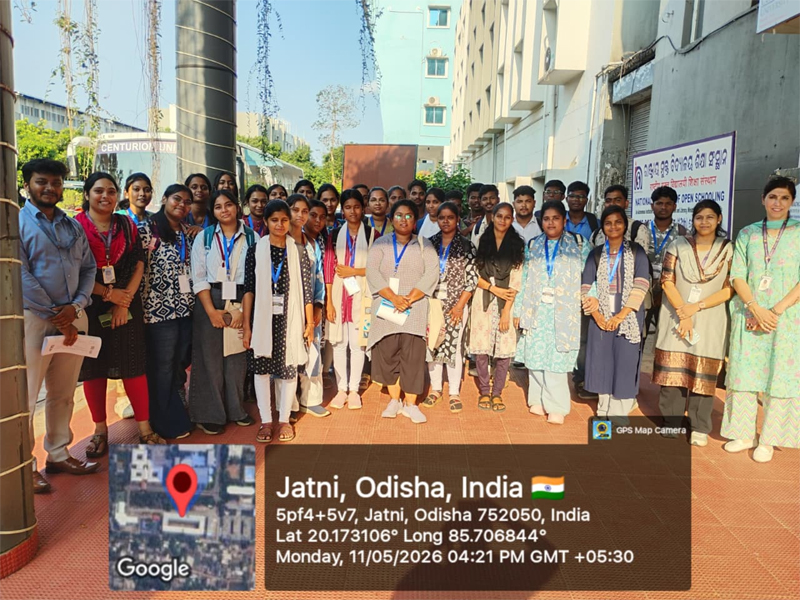
Bhubaneswar 22nd May 2026 : More than 1.18 lakh students from various institutions under the Higher Education Department have been provided internship and community service opportunities during the academic year 2025–26. As per the provisions of the National Education Policy (NEP) 2020 and the guidelines of the University Grants Commission (UGC), undergraduate students are required to undertake internships and community service during the fourth semester.

In this context, the Higher Education Department of the Government of Odisha has engaged over 1.18 lakh undergraduate students in internships and community service programmes during the academic session 2025-26. The duration of the internship programme is six weeks, during which students will receive mentorship and practical training. Internship opportunities have been provided in government offices, educational institutions, Anganwadi centres, Panchayat Samiti offices, health centres, financial institutions, private organisations and NGOs functioning under various departments of the government. Separate guidelines have been issued for the internship programme.

Students will be awarded academic credits based on their attendance, presentations, weekly reports and overall performance during the internship. These credits will also be reflected in their Academic Bank of Credits (ABC). Certificates will be awarded to students upon successful completion of the internship programme.
This year, the highest participation in internships has been recorded from the districts of Ganjam, Sundargarh, Mayurbhanj, Cuttack and Balangir. Students have been placed in offices functioning under departments such as Panchayati Raj & Drinking Water, Women & Child Development, Health & Family Welfare, Agriculture & Farmers’ Empowerment, Higher Education, and School & Mass Education.

Higher Education Minister Shri Suryabanshi Suraj said that priority is being given to quality and research-oriented education in higher educational institutions. He stated that internships and community service would provide students with practical exposure and help them understand grassroots-level functioning and administrative processes. He further said that internships in government institutions, private industries and NGOs would enable students to understand the practical applications of their academic curriculum, which would help them in future employment and entrepreneurship opportunities.
